
.
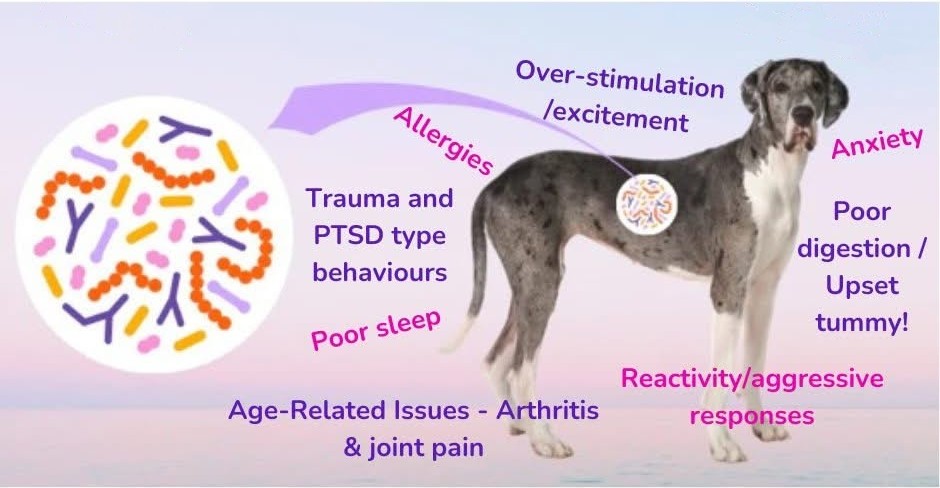
The gut microbiome is by far the most diverse microbial community in humans as well as animals. In dogs it is home to over 1014 bacterial species and science is discovering that some of these microbes can actually commandeer the mind, control tastes and alter moods
Behaviour issues appear to be increasing and behaviour support alone does not always seem to resolve issues. Over the last few years there has been increased focus on how the gut microbiome plays a significant role in the working of the immune system and nervous system of individuals and how it influences health and behaviour. Increasing evidence shows that many behaviours are the result of changes to the gut microbiota which play an important role in the regulation of the gut-brain axis. This pathway is also involved with, and relevant to, the aging process and cognitive decline.
A phone consult will help us find how much the gut could be influencing your dog’s behaviour, whether a gut test would be helpful – which it usually is because any behavioural issue will be causing stress and therefore impacting the gut. In most cases, behavioural support is also necessary in order to address the issues that may have caused any imbalance in the first place and to reduce the impact of stress on the gut in the future. How much support and what may be involved is assessed during the consult. You may be asked to consider some dietary adjustments and starting these and behaviour work while awaiting test results will mean you already have a head start. The gut test will then help us target areas more specifically and make any further adjustments necessary.
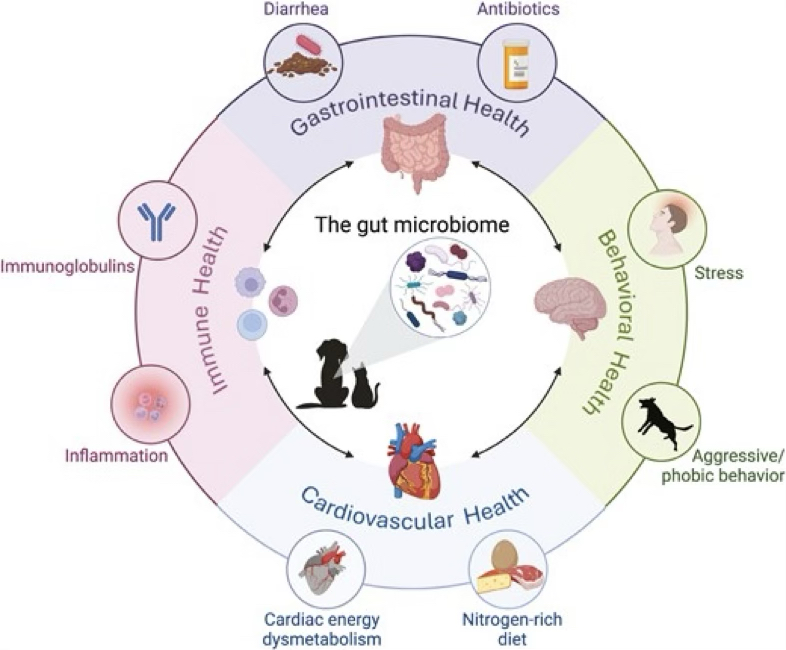
During a consult we not only look at behaviour but will also (where it seems relevant and appropriate) assess things like:
- The stress response system (which strongly influences behaviour) and how the gut is involved with it
- What bacteria do within the body
- The gut’s relationship with pain and inflammation
- The affect of medications, disease, environment, birth, early development and the importance of diet
- The impact of antibiotics, vaccination, pain medications and treatments for things like fleas and ticks.
- The consequences of gonadectomy (neuter/spay) and the loss of sex hormones (because the stress response system is triggered, affecting gut health and therefore behaviour)
- Diet and behaviour and how this has an impact on bacterial composition
Consult and written report with suggestions on how to proceed: £120.00
(Please allow 1-1.5 hours for this call. Anyone booking behaviour support following this consult will be given 10% discount off their initial foundations sessions and can order the gut test at a further discounted rate)
NOTE: Not all gut biome tests are equal and there are many more coming onto the market. The test used is from Biome4Pets test who have the largest library of canine microbiome data in the UK and Europe consisting of faecal samples from a wide variety of dogs, breeds and ages. The database currently has over 10,000 individual analyses of dogs completed by the same method, in the same lab and is a great resource for observing what is going on in the GMB of dogs. The core microbiome is a set of microbes at the phyla level (a group of related organisms) that appears through a population of dogs and by understanding the core, it is possible to identify imbalances and dysbiosis (Hughes, 16/10/24). The core is reviewed by the company every two years because it changes in relation to stresses placed on it – the pandemic, for example, being one.
Where a diet consult may be necessary, we recommend Naomi Farrow at Paws4Training. Naomi has been researching diet and nutrition (which is her passion) for over 14 years and in particular has a wide knowledge and experience of feeding raw. She is currently studying nutrition with the ISCP (International School of Canine Psychology)